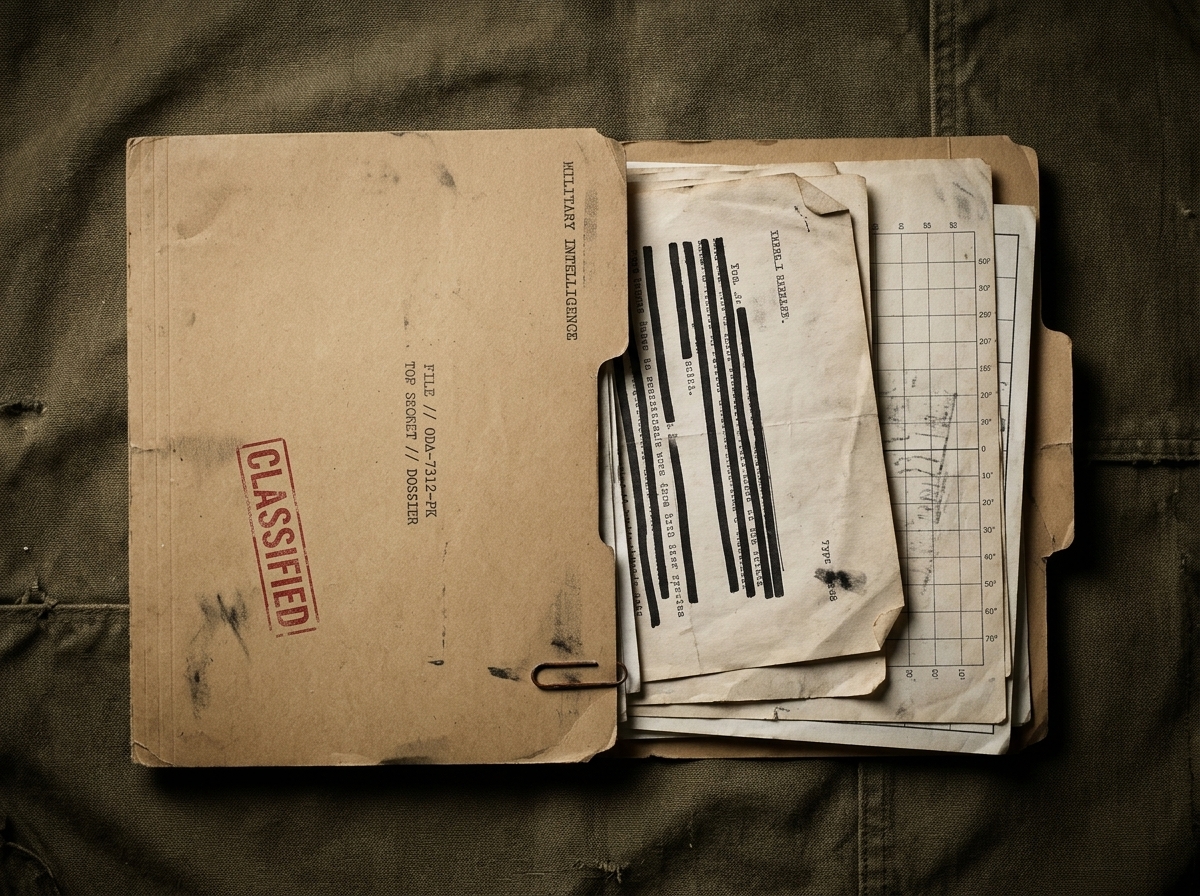
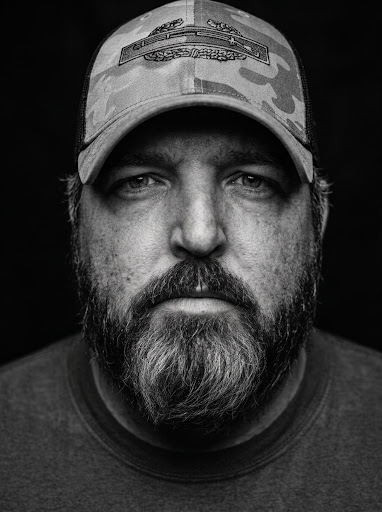
NORTHERN POLISSIA // PROLOGUE: THE GHOST (COMPLETE EXCERPT)
The human body was not designed to remain motionless in negative-fourteen-degree temperatures. At that extreme edge of the thermal envelope, the blood thickens, the joints begin to lock rigid, and the mind starts to actively betray the mission.
Artyom Volkov had been lying in the snow for seventy-two consecutive hours, his hide site a textbook piece of old-world fieldcraft.
Two days before the severe winter front pushed down from Belarus, he had scouted the reverse slope of the ridge and located an ancient, uprooted Scots pine. The root ball stood six feet high, a tangled shield of frozen clay, river rock, and hardened pine loam. Excavating a shallow subsurface scrape beneath the massive deadfall, he carved out a narrow trench barely wide enough for his shoulders, reinforcing the roof of his snow cave with interwoven spruce boughs, dead birch bark, and packed ice, ensuring his thermal signature was completely absorbed by the earth.
From the outside, the hide was invisible: no disturbed snow, no angular shadow, and no trace of human occupation to betray his presence to passing aerial sweeps.
Inside the freezing trench, Volkov operated in a state of suspended animation. The human body burns calories at an alarming rate simply fighting off hypothermia, but shivering causes micro-tremors that destroy downrange ballistic accuracy. To survive seventy-two hours without moving, he had trained his nervous system to drop his resting heart rate below forty-five beats per minute. He did not eat solid rations that required digestive energy. Every six hours, he chewed a measured strip of dried reindeer tallow, letting the icy fat dissolve against the roof of his mouth to fuel his internal furnace.
To mask his breath, he cycled air through a specialized particulate tube packed with activated charcoal and loose snow. The crude, analog device baffled the white plumes of his exhalations, condensing the moisture before the hot vapor could rise through the spruce boughs and flag his position to the Ukrainian drone patrols skimming the canopy.
He did not rely on modern, digital ballistics computers, satellite-linked terrain tablets, or laser rangefinders. Active electronics emitted distinct electromagnetic signatures, and the Ukrainian signals intelligence battalions stationed along the northern highway were hunting for unauthorized radio frequency spikes in the sector. Instead, Volkov trusted the analog tools of a bygone Soviet era.
Tucked inside his sheepskin coat was a battered, grease-stained data book filled with handwritten tables for windage, elevation, spin drift, and aerodynamic drag. Every entry had been calculated through thousands of rounds fired across nearly five decades of cold-weather stalking. He knew how cold steel behaved when the mercury dropped, and he knew how sub-zero air density compressed bullet flight.
To gauge the shifting weather without active emissions, he relied on an analog barometer strapped securely to the inside of his left wrist. The device was mechanical, passively tracking localized barometric shifts. Over the last four hours, he had watched the dial register a steep plunge in atmospheric pressure. A severe winter microclimate was settling over the valley, compressing the air and increasing downrange aerodynamic resistance on heavy lead.
Closing his eyes for a moment, Volkov focused on the acoustic environment outside his trench, treating the freezing forest like an immense, complex audio mix. He systematically filtered out the baseline noise floor of the howling wind, the groaning timber, and the dry scrape of dead birch branches, isolating the specific mechanical frequencies that did not belong in nature.
He listened for the dull crunch of studded tires on packed ice. He listened for the deep, low-frequency hum of diesel engines climbing the switchbacks. He listened for the metallic click of sling swivels and the sharp snap of frozen underbrush.
The requisitioned Soviet-era sanitarium stood like a concrete fortress against the leaden sky, just three hundred meters down the valley. The compound had been heavily fortified over the last six weeks, and concertina wire topped the high perimeter walls, while sandbagged machine gun emplacements covered the primary access road.
It was the northern command center for the Ukrainian territorial defense forces, and it was awaiting a very specific, high-value target.
General Marchenko was a highly capable, aggressive tactician. He had successfully repelled three separate Russian armored incursions along the border over the last month, anticipating tactical vectors with uncanny precision. His competence made him a profound threat to the ongoing eastern offensive. Moscow had demanded a definitive solution, and the Directorate had activated its most lethal, deniable asset to provide it.
Four hours before the convoy’s scheduled arrival, a two-man Ukrainian perimeter patrol had walked within fifteen meters of the uprooted pine. Volkov had watched the lower halves of their winter boots move past the two-inch loophole in the frozen roots. The lead soldier had stopped to adjust the sling of his Kalashnikov, his breath pluming white in the frigid air while his partner scanned the upper ridge with a handheld thermal monocular. Neither soldier had looked twice at the snow-packed mound of pine loam nearby. To an infantryman freezing on a routine morning sweep, a deadfall root ball was just another piece of dead timber in an endless winter forest.
That was the fundamental difference between a soldier and a stalker. A soldier occupied terrain by force, moving through the woods as an outsider fighting the cold. Volkov surrendered to the cold until he became part of the landscape’s own geology. When his grandfather had taught him to hunt wolves in the Arkhangelsk taiga nearly fifty years ago, the old man had beaten a single rule into his skull: the eye detects motion first, straight lines second, and thermal contrast third. Erase all three, and a man can lie at the feet of an army without ever existing.
Now, as the distant rumble of heavy diesel engines echoed up the valley floor from the southern switchbacks, Volkov allowed his eyelids to open half a millimeter, his pupils adjusting effortlessly to the flat gray glare reflecting off the snowpack.
Three armored SUVs climbed the final winding grade, their studded winter tires throwing up thick chunks of dirty snow and road grit. The rhythmic growl of the diesels was the operational cue he had been waiting for.
He shifted his weight by a fraction of an inch, bringing his right eye behind the optic of his heavily modified SV-98 sniper rifle. The weapon, a masterpiece of Russian ballistic craftsmanship, was built on an aviation-grade aluminum bedding block and chambered in the venerable 7.62x54mmR cartridge. He had hand-loaded the specialized 7N1 sniper ammunition himself, weighing each powder charge to a tenth of a grain to ensure absolute, terrifying consistency.
The heavy wooden stock of the rifle was scarred with decades of field use and wrapped in strips of dirty white canvas tape that broke up its silhouette against the snow. Resting atop the receiver, the massive fixed-power optical scope was fitted with a honeycomb anti-reflective killflash on the objective lens. There would be no accidental lens glint, no reflection of the pale winter sun, and no warning.
The convoy rolled through the main iron gates of the sanitarium compound. Heavily armed Ukrainian special police operators poured out of the lead and trail vehicles. Moving with textbook military precision, they established an immediate, aggressive three-hundred-and-sixty-degree security perimeter in the central courtyard.
Two operators beside the rear vehicle raised portable thermal scanning devices, methodically sweeping the surrounding tree line for anomalous heat signatures in the deep snow.
Volkov remained unnaturally still as the dense earth, ice-packed spruce boughs, and three days of drifted snowpack absorbed his faint biological heat bloom completely.
Their thermal optics swept across the root ball, registering nothing more than frozen wood and dead peat.
The heavy armored door of the center SUV swung open. General Marchenko stepped out into the biting winter air. He was a broad, imposing man wearing a heavy woolen overcoat with senior officer shoulder boards and a peaked service cap. Not lingering in the open, he moved with the brisk, urgent efficiency of a seasoned commander who understood intimately that every second spent outside hardened cover was a gamble against the dark.
Volkov calculated the final firing solution in his head.
The distance was exactly three hundred twelve meters. The target was moving at an oblique angle, walking at roughly one point two meters per second. The localized crosswind was blowing from left to right at four meters per second through the defile, funneling off the frozen rock face.
The plunging sub-zero temperature demanded three-tenths of a milliradian on the elevation turret to compensate for the denser air mass. He reached up with his gloved left hand and dialed in three sharp, mechanical clicks.
Marchenko reached the heavy, reinforced glass entrance doors of the command center, pausing for exactly two seconds and turning his head over his right shoulder to issue a final security command to his detail captain.
Two seconds was an eternity for a master sniper.
Inhaling slowly, Volkov filled his lungs with the cold, filtered air from his charcoal tube. He let the breath out, settling his pulse into the natural respiratory pause at the absolute bottom of his breathing cycle. In that microscopic window of physiological stillness, his heart rate slowed to a deliberate, rhythmic crawl, and his index finger found the polished steel shoe of the trigger, taking up the initial two millimeters of slack, feeling the clean, crisp wall of the sear, and applying three pounds of rearward pressure.
The SV-98 bucked hard into his shoulder pocket.
The heavy rifle barked with a deep, concussive roar, its blast wave sending displaced snow billowing out from the hidden loophole beneath the roots.
The 7.62-millimeter steel-cored projectile broke the sound barrier the instant it cleared the muzzle brake, crossing the three-hundred-meter expanse of the valley in less than four-tenths of a second. Cutting through the howling crosswind, its gyroscopic spin held true through the dense winter air.
General Marchenko never heard the gunshot.
The heavy bullet struck the right side of his skull, punching through the temporal bone with catastrophic kinetic energy before exiting the opposite side. The general collapsed to the frozen concrete instantly, his peaked service cap spinning into the bloody snow.
Absolute chaos detonated across the courtyard.
The security detail screamed frantic commands over their tactical radios, diving behind vehicle tires and blindly pointing their rifles toward the sprawling tree line.
Mounted heavy machine guns opened up in wild, unsuppressed bursts, chewing through the lower forest canopy and shredding pine branches in a desperate, untargeted response.
Inside his dark trench, Volkov did not celebrate.
He did not linger behind the optic to admire the terminal impact, moving now with cold, mechanical efficiency. Racking the bolt of the SV-98, he caught the smoking brass casing in his gloved palm before it could hit the frozen earth. Leaving forensic evidence was the fatal flaw of amateur marksmen. He dropped the hot brass into a dedicated dump pouch on his chest webbing.
Volkov collapsed the front of the snow cave, pulling the interwoven spruce boughs inward to seal the firing loophole and erase the dark void of the opening, and crawled backward through a pre-dug exfiltration trench that wound fifty meters through a dense thicket of wild rhododendrons.
At the rear of the escape lane, he strapped a pair of lightweight, hand-carved wooden snowshoes to his felt boots to disperse his body weight and avoid leaving deep, traceable boot-heel impressions in the fresh powder.
Volkov did not run. Running induced panic, increased the heart rate, generated unnecessary thermal blooms, and burned vital glycogen, so he walked with a slow, measured, relentless stride, heading north toward the deep timber. The howling Polissian wind swept across the ridge behind him, filling the shallow impressions of his snowshoes with fresh, drifting powder within minutes.
By the time the Ukrainian quick reaction forces scrambled armored patrols up the steep access road to search the ridge, there was nothing to find.
The sniper was gone.
The Ghost of Pripyat had faded seamlessly back into the winter storm, carrying a spent casing in his dump pouch and leaving only a dead general and an escalating geopolitical nightmare in his wake.